ONLINE TUTORIAL PROGRAMME 2.0
Understand What Any Picture Reveals, The SSCA Method:
distance-learning programme with online contact hours (723/10/2020)
Keep learning so you can make better decisions in your professional work and in your own life too! Here you will find authentic knowledge that comes from the university research workshop. On a public or shared computer, always log out after studying.


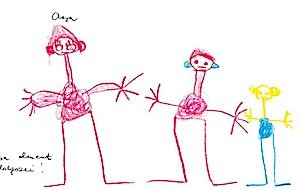
Practical projective drawing interpretation
This course is for anyone who would like to work through the interpretation of a drawing from beginning to end,…
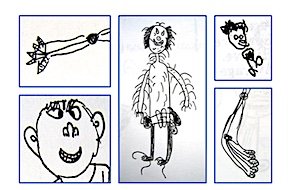
Recognising symptoms in drawings
A popular topic in the international literature on projective drawing interpretation is which features of drawings reveal genuine symptoms. The…
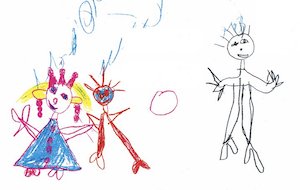
Family projective drawing interpretation exercises
This course focuses specifically on exercises related to the family drawing. It is suitable both for absolute beginners and for more experienced…

Introduction to projective drawing interpretation
This introductory course delivers the following knowledge in a condensed form: What are the biggest pitfalls,…
Analysis of fine art works
How do you apply the SSCA to understanding fine art works? One area of applying the SSCA is the interpretation of fine art works…

1. Foundational knowledge and the five biggest misconceptions
In the first week the professor gives an overview of the essence of the modern approach to projective drawing interpretation. Then straight away…

2. The seven-step method (SSCA) Part I
In the second week, with the help of many exercises, you get to know part of the seven-step method (SSCA) and the…

3. Consultation week (1)
In the third week we reach the first consultation, which takes place in the form of an online contact hour. Come and…
25. The child and baby version of the Sixty Second Drawing Test (consultation)
We begin the new semester with the most popular test. So far you have only learnt the adult version in semesters I and II,…
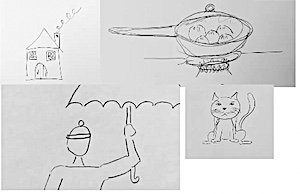
26. Case analyses, drawings you bring (consultation)
We carry out joint case analyses, discuss the drawings collected by the participants and help with writing the thesis.…
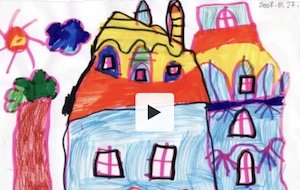
27. Classic drawing tests: interpreting house drawings
Classic drawing tests: the interpretation of house drawings, their symbolism, the floor plan, coloured house drawings, the characteristics of children's house drawings
28. Classic drawing tests: interpreting human figure drawings
Classic drawing tests: the interpretation of human figure drawings (the methods of Goodenough, Machover and others). You encounter them in spontaneous works, in…
29. Independent case work
In this chapter a new type of task follows: you encounter complete case analyses which (by pausing the videos) you…
30. Dynamic drawing examination
The theoretical foundations and method of the dynamic drawing examination (Hárdi, DRV), formal and content categories, personality levels, temporality. Schizophrenia,…
31. Case analyses, drawings you bring (consultation)
We arrive at another consultation in which we carry out joint case analyses, student presentations take place and, of course, individual help…
32. Introducing the Five-Step Intervention Model
The Five-Step Intervention Model: a single small step that leads to a chain reaction and sets you on the path of change…
33. The Five-Step Intervention Model (consultation)
Discussion of the participants' homework, case studies and further additions
34. Case analyses, drawings you bring (consultation)
Seize the opportunity: we are again at a practical consultation where you can ask for individual help.
35. Calculating the future: the impact-strength matrix and life paths
In the most special chapter of the course you become able to map out life paths on the basis of drawings and to grasp the personality more than ever before…
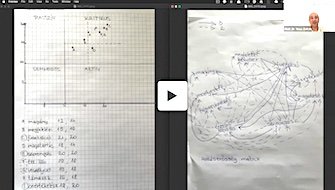
36. Impact-strength matrix: discussing the homework. What comes next? (consultation)
A practical session, together with a discussion of further study options: psychological picture collections, courses at home and abroad, the Hungarian…
4. The Seven-Step Configuration Analysis (SSCA) Part II
In the fourth week we continue the seven-step method (SSCA). Exciting exercises follow, because you learn the intuitive…
5. Consultation week (2)
In the fifth week there is another consultation, like the previous one in the form of an online contact hour. Come and use…

6. The anatomy of the line, spontaneous scribbles, the scribble test of Grätz, Meurisse, Kutash-Gehl
In this chapter you learn to analyse the anatomy of the line, which from now on you will apply continuously to every single…

7. The psychological interpretation of colours, coloured drawing tests, the colour-key test
To understand drawings you need a thorough knowledge of the psychological interpretation of colours, since the choice of colour and the…
8. Consultation week (3)
Another consultation follows, in the usual way in the form of an online contact hour. Come and make the most of the opportunity!…
9. Joint drawing examination: online contact hour
The essence of the joint drawing examination is that, in contrast to the individual drawing examination, two or more people create (draw,…
10. Consultation week (4)
Let us have another consultation, which is very popular. Join in and make the most of the opportunity!

11. Projective drawing interpretation of relationships: the couple, nonexistent animal drawings, happiness paintings
This week you get to know the drawing-examination methods for the parental relationship, which in many cases fundamentally shapes the child's life…
12. Animal symbolism and animal drawings I-II: online contact hour
The psychological meaning of animals is a very wide-ranging topic. It is based on identification and projection with animals: the…

13. The eight types of the family drawing, kinetic kindergarten and school drawings, mother-child drawings and other methods for examining children's drawings
The family drawing is the most important children's-drawing theme, because what the child reveals about himself in the family drawing, in words he…

14. A detailed analysis of tree drawings: Koch, Bolander, the two types of the four-tree test, Stora's innovation and the tree-in-a-storm technique
You have reached the study of the classic drawing-examination methods! The first such method is the analysis of tree drawings. Unfortunately the…
15. Consultation week (5)
An exciting consultation week follows, in which you can also acquire new knowledge. Come and make the most of the opportunity!…
16. The Seven-Step Configuration Analysis (SSCA) Part III
We have reached the third part of the SSCA method: we revise and raise our knowledge to a higher level. The content featured in this chapter…

17. Lightning-fast reading of drawings in 30 seconds
With the help of the SSCA method, the expert is capable of instant analysis. Of course this takes a great deal of study. The…
18. Consultation week (6)
We are reaching ever more interesting consultations: this time we talk about special variants of children's drawings. Come and make the most…

19. Supportive counselling with drawings: the living-space test, the Psychogalaxy scribble test, the life-path drawing, the Sixty Second Drawing Test
The drawing examination is an extremely useful tool in the counselling situation, since it honestly reveals the client's current…

20. Special methods I. Freudian ego strength and the mobilisation of resources
The crowning part of the course is the special fields of application. We have selected two of these. In the first you learn…

21. Special methods II. The emotional map of the home
The second special method is the emotional floor plan, which reveals where in the home the positive…
22. Consultation week (7)
At the seventh consultation we give help with practical analysis, you learn the authentic method of symbol analysis, and you also get to know…

23. An outlook: other fields of application
We intend this chapter as a rest, because there is no new study material in semester II any more. This way you can catch up…
24. Consultation week (8)
We hold this summarising consultation at the participants' request, because after it semester III follows.…